Start with the appointment you can actually serve
A clinic does not need every kind of search visitor. It needs people who can reach the practice, understand its services and take a suitable next step. Before researching keywords, write down the appointments you accept, the clinicians providing them, languages available, opening arrangements and areas patients realistically travel from. Ask reception which questions repeatedly delay a booking. These are useful inputs for a search strategy because they come from the actual business.
Separate business information from clinical education. A page about finding an acupuncture appointment in your town serves a different purpose from an explanation of a medical condition. The first can describe the practice, its process and practical details. The second needs appropriate clinical review and evidence for its claims. Do not ask a marketing writer to invent treatment outcomes or turn every condition into a sales page. If your clinic also offers Chinese herbal consultations or other traditional Chinese medicine services, describe only the services your team actually provides.
Choose one priority for the first publishing cycle. For example, a hypothetical single-location practice might want more inquiries for new-patient consultations during available weekday sessions. Its initial work should answer those visitors' questions and fix booking friction. Publishing unrelated wellness articles would consume the same writing time without addressing that operational goal.
Give each search intent one clear destination
Build a short query-to-page map before adding URLs. Use the language prospective patients use, including the city when it identifies a real location. Treat the examples below as research prompts, not measured search-volume claims. Check your Search Console queries, reception notes and the actual search results to decide which wording fits your practice.
Assign one primary page to each task. A clinic home page and a general acupuncture service page can overlap if both repeat the same introduction without helping different decisions. Give the home page the job of introducing the practice and routing visitors. Let the service page explain the appointment, the practitioner and how to enquire. Link them using clear labels. If two existing pages do the same job, improve the stronger page before creating a third.
| Search task | Example wording | Useful destination | Evidence to supply |
|---|---|---|---|
| Find a nearby practice | acupuncture clinic in [city] | Home or actual location page | Address, entrance, contact and practitioner |
| Understand an appointment | first acupuncture visit [city] | First-visit page | Your actual intake and appointment process |
| Find language support | Chinese-speaking acupuncturist [city] | Practitioner or language-specific page | Languages each relevant team member speaks |
| Check practical fit | [clinic name] fees or parking | Fees or location section | Current clinic-approved terms and directions |
| Research a health question | A patient question about a condition | Clinician-reviewed educational page, when appropriate | Qualified review and relevant clinical sources |
Make the clinic page useful before adding more posts
Read the page as someone who has never visited. Can they identify the practitioner, understand what happens at a first visit and work out where to go? Publish an accurate biography, credentials the clinic can substantiate, real photographs of the entrance and treatment environment, and a clear contact route. Explain booking requirements and how patients can ask about fees or coverage without implying that every plan or service is covered.
Use the page title and main heading to describe the page's actual subject. A readable title such as 'Acupuncture in [City] | [Clinic]' can introduce a local service page. A separate first-visit guide needs its own descriptive title. Repeating a string of nearby towns, treatment keywords and superlatives makes the page harder to understand and does not provide local evidence.
Include details that only the clinic can supply: which entrance to use, whether an elevator is available, how to reach reception, which booking option is for a new patient, and what information will be provided after an inquiry. Ask a staff member to follow the published instructions from a phone. Correct discrepancies before commissioning another article. These are practical quality checks, not claims that a particular paragraph earns a ranking boost.
Work on Maps and website results as separate channels
Google describes local ranking in terms of relevance, distance and prominence. A complete Business Profile helps represent the clinic, but you cannot remove the effect of the searcher's location. Record where and how you checked visibility instead of treating one search from your office as the result every patient sees.
Match the profile's website destination to the practice a visitor is trying to find. A multi-location clinic should send someone to information about the relevant location, not require them to guess among branches. Maintain a record of your profile owner, website administrator and booking-system contact so a move or staff change does not leave the public information stranded.
A useful weekly check is operational: follow the profile's website link, call the displayed number with permission from reception, and confirm that the appointment route still works. Make needed factual changes and record them. Posting more often cannot compensate for a link that opens a closed location or an unavailable appointment type.
Publish answers with a reason to exist
Choose the next article from an unanswered decision. If prospective patients repeatedly ask how first appointments differ from follow-ups, explain your actual process. If visitors cannot find the office inside a shared building, publish a clear arrival guide. Keep clinical education under practitioner review. A useful article resolves a question and links to an appropriate next step; it should not merely restate a service-page introduction.
For each proposed article, write down the reader, question, source material and destination link. Stop if you cannot identify a distinct question or an informed reviewer. Use clinic-owned photographs with permission and explain what they show. Label hypothetical examples as examples. Never present made-up patient histories, search improvements or appointment statistics as a case study.
Once an article exists, connect it to the relevant service or first-visit page and link back where that is useful. Keep the relationships understandable to a reader: the first-visit article can explain what to expect, while the appointment page handles the request. An isolated post accessible only through a sitemap is harder for a prospective patient to discover while exploring the site.
Measure qualified inquiries without confusing them with clicks
Start a change log with the date, affected URL and intended outcome. In Search Console, examine the page's queries, impressions and clicks over comparable periods. Keep branded searches separate when judging whether new people are discovering the practice. An impression means a result was shown; it does not mean someone read the page or booked. A change in average position also needs the query and device context.
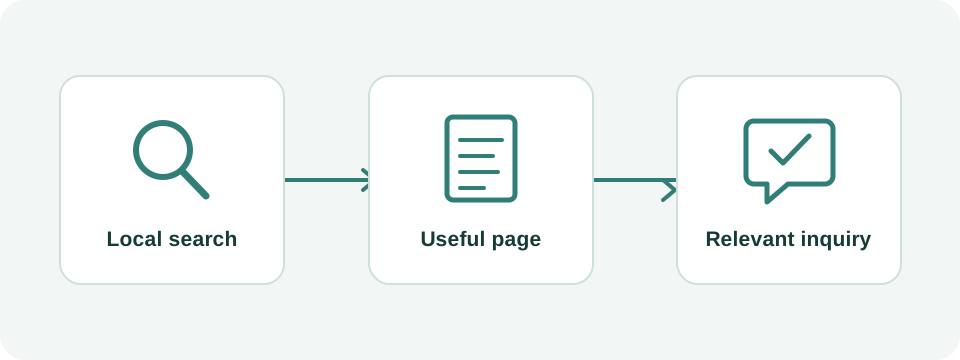
Use a simple operational funnel: relevant website visits, appointment-link use, inquiries received, suitable inquiries and appointments booked. A click on a booking button is not a completed appointment. Where a third-party scheduler does not provide reliable completion reporting, say so and reconcile with reception's aggregate counts instead of inventing a conversion rate. Keep personal health details out of marketing reports.
For a hypothetical review, suppose a service page receives more relevant search clicks but reception receives no additional inquiries. Inspect the mobile booking path and appointment availability before producing more pages. If inquiries rise but most ask for a service you do not offer, clarify the content and the page's search intent. The appropriate fix depends on which step is failing.
Turn the findings into a manageable publishing plan
In the first phase, confirm business facts, page ownership and the inquiry route. In the second, improve the highest-priority service page and its supporting first-visit information. In the third, publish the most useful unanswered question and assess its actual search traffic and inquiry quality. Review periods should allow enough observations to make a decision; a small clinic may have too little data for a meaningful weekly conversion comparison.
When hiring help, ask for a page map, the proposed changes, who will review factual claims and a report that distinguishes visibility from inquiries. A provider should explain why an article deserves its own URL. Wintra can help with the website structure, bilingual content and local-search implementation; the clinic supplies verified practice information and approves clinical material. Bring your existing website and booking link to the conversation so the scope starts with observable problems.