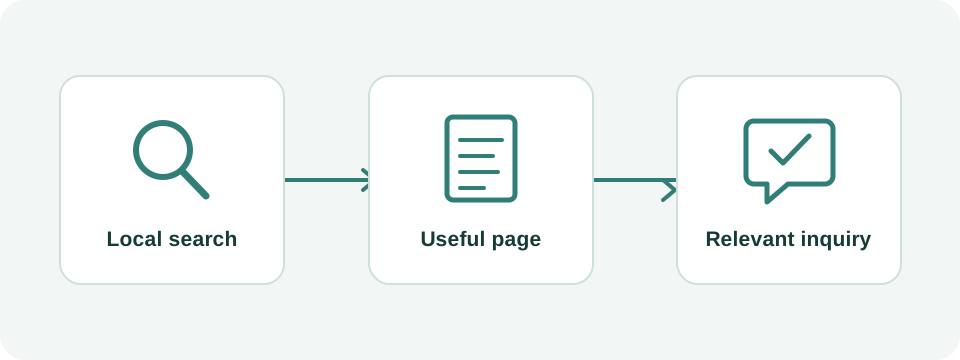
Start with capacity and a specific service
Before requesting proposals, identify which appointments the business can accommodate. A spa with empty weekday sessions has a different problem from a wellness center that is fully booked but receives inquiries for services it does not offer. Write down the location, priority service, available capacity and intended customer action. A statewide promise to attract everyone in Texas is too broad to guide a small operating budget.
For a hypothetical Dallas spa, the brief might focus on a particular session available at its existing location and on reducing confusion between a single visit and a package. The proposed work should explain that menu, connect it to the right booking option and track suitable inquiries. This is a procurement example, not evidence of local search demand or a client result. Confirm the actual need with the owner and front desk before assigning a dollar amount.
Separate setup, recurring work and outside charges
A website build creates or replaces an asset. Monthly SEO work should maintain or improve that asset against an agreed plan. Ask the provider to show those scopes separately, including who writes service descriptions, maps booking items and handles language review. A monthly fee can appear small while leaving an essential migration, photographer or scheduler subscription outside the proposal.
Use the worksheet to normalize quotations. Replace general promises such as 'full optimization' with the pages, changes and acceptance evidence you will receive. Specify how new requests are priced and which business accounts remain under your control. Advertising spend belongs on its own line: buying ads is a different channel, and Google does not sell better organic rankings.
| Work item | Cost treatment | Deliverable to name | Acceptance evidence |
|---|---|---|---|
| Website setup or repair | One-time project | Named pages, booking routes and URL changes | Approved pages and working journey tests |
| English-Chinese content | Initial scope plus priced updates | Page pairs and policy-review responsibilities | Both versions match approved service facts |
| Business Profile work | Setup and agreed maintenance | Specific factual corrections and link checks | Public information matches the real location |
| Ongoing SEO | Monthly defined scope | Prioritized changes and outcome review | Change log, affected URLs and useful findings |
| Hosting and booking software | Separate recurring subscriptions | Provider, plan, owner and renewal date | Business access and documented recurring cost |
| Paid advertising | Separate media and management costs | Channel budget and campaign scope | Spending and results reported separately |
Calculate cash cost and owner effort separately
Here is an invented planning calculation, not a Texas market quote, a Wintra price or an expected return. Assume a limited setup project costs $1,800 and an agreed maintenance scope costs $650 per month. Over three months, the cash cost is $1,800 + (3 × $650) = $3,750. Assume existing software costs do not change and no advertising is included. Add any actual taxes, subscriptions or extra work that your real proposal requires.
Now include owner effort: eight setup hours plus two hours per month equals 14 hours. At an assumed internal planning value of $35 per hour, that represents $490 of time. The combined planning cost is $4,240. Keep the $490 separate from cash payments; it is an opportunity-cost assumption, not an invoice. If the owner cannot supply those hours, reduce the launch scope or price the missing work explicitly.
Suppose each additional completed appointment in the same three-month window contributes $80 after its direct incremental delivery costs. Covering $3,750 of cash expense would require 47 additional appointments; covering $4,240 including the assumed owner time would require 53. Round up because part of an appointment cannot cover the shortfall. These are break-even illustrations, not traffic or booking forecasts. They assume the appointments are additional, paid, completed and available to serve; do not substitute total bookings or speculative lifetime value.
Write owner responsibilities into the same schedule
Content production depends on business decisions that a provider cannot responsibly invent. Assign someone to approve service inclusions, prices, package conditions, photographs and language support. Assign another owner where necessary for scheduler access or front-desk reporting. Put response dates beside those tasks. If the service menu changes halfway through drafting, the project needs a documented revision rather than two conflicting sources of truth.
For the fictional budget above, use the setup hours for a menu review, account-access check, content approval and booking rehearsal. Use the recurring time for reviewing proposed changes and checking aggregate inquiry outcomes. The exact allocation will differ by business. Request a warning when owner delays change a release date or consume a revision allowance, so the team can make an informed scope decision before more work accumulates.
Measure each channel without claiming every booking
Use Search Console for the website's search queries, impressions and clicks, then inspect the priority pages over comparable periods. Use Business Profile reporting for its available interactions. Google notes that profile performance can include organic results and Ads, and its calls metric counts call-button clicks. Those totals cannot simply be labeled completed phone inquiries caused by SEO.
For website links you control, consistent campaign parameters can distinguish sources in analytics. Document the convention and test it; do not add customer information to URLs. Keep website visits, inquiry submissions, confirmed bookings and completed visits as separate steps. Where the booking provider cannot reliably connect the steps, report the gap and use the desk's aggregate records. A customer's recalled source is useful context, not proof of exclusive attribution.
Compare channel evidence with operational changes. A promotion, new practitioner, changed opening schedule or referral campaign can affect the same period. Keep returning customers and new customers distinguishable where the records support it. The goal is a decision you can defend, not a dashboard that allocates every appointment to the latest website edit.
Set stop, repair and expansion criteria before renewal
Agree on a review date and the evidence needed for each decision. Pause new publishing if booking links fail, service details are disputed or nobody can approve the work. Repair the conversion path if relevant visits increase but suitable inquiries do not. If inquiries arrive for an unavailable service, correct the expectation before purchasing more traffic. These decisions address the failing step instead of treating every problem as a need for additional articles.
Consider expanding only when the existing scope is delivered, the measurement is usable, the business has capacity and a new service or location presents a distinct customer need. A quiet short period with very little data does not establish failure, just as one good week does not establish durable growth. Set observation periods appropriate to the volume and keep the uncertainty visible. A three-month budgeting example is not a promise that rankings will mature within three months.
For Maps work, record where visibility was checked. Distance remains part of local results, so an agency cannot guarantee the same position across Dallas or Houston. Ask for an explanation of changes and their evidence. Google advises against providers who guarantee first place; a checklist score also cannot guarantee bookings.
Send a brief that makes competing proposals comparable
Give each provider the same starting material: website and profile links, actual locations, the priority menu, booking software, languages supported, known defects and the owner's available review time. Ask for a setup scope, recurring deliverables, exclusions, dependencies and exit handover. Require an explanation of how the first proposed change addresses your identified problem. A longer keyword list is not a substitute for that reasoning.
Wintra can help scope website, bilingual-content and local SEO work for Texas spas and wellness centers. Bring a budget ceiling and the work your team can handle internally. The resulting proposal should show what can be completed within that boundary, what remains outside it and what evidence will guide the next decision. Compare that concrete plan with alternatives before committing to ongoing work.