What should contractor SEO in Wichita focus on?
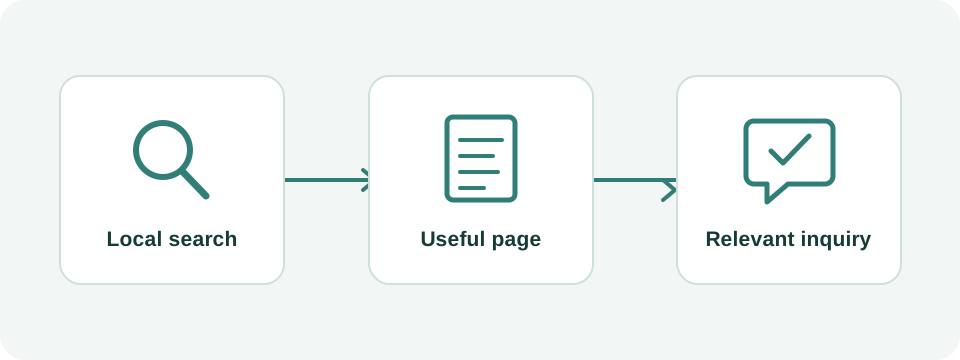
Contractor SEO in Wichita should connect an actual service, a genuine service area, and an easy estimate request. Start with the jobs your crew can take profitably. Build clear service pages, an accurate Google Business Profile, and project evidence that helps a homeowner decide whether to contact you. Measure qualified estimates rather than traffic alone.
A search for a bathroom remodel carries a different buying decision from a request for an urgent electrical repair. Putting both on a vague page called Services makes customers do the sorting. The website should explain the type of work, what happens during assessment, and any boundaries that prevent a wasted call.
Use Wichita as the starting market if that is where you operate. Add Derby, Andover, Maize, or another area only when your business really serves it. These place names are planning examples, not a claim that your company should target every nearby town. A practical service boundary comes from crew availability and travel economics.
Build a service map before a keyword list
List the last 20 inquiries you can review without exposing customer details. Mark the requested service, whether the job was suitable, whether you quoted, and why it was won or declined. Even a small set can reveal a mismatch between the website's broad promises and the work the business actually wants.
Next, choose a primary page for each meaningfully different service. Do not create separate pages for every synonym. Roof repair and roof replacement can require different explanations; three variations of roof-repair wording may belong on the same page. The worksheet below is a hypothetical contractor example. Replace it with your own services and evidence.
| Customer need | Main page | Information that earns the inquiry |
|---|---|---|
| A specific repair | Dedicated repair service page | Work accepted, assessment process, scheduling limits |
| A larger replacement project | Dedicated replacement service page | Options, project stages, relevant completed work |
| Whether the crew serves my town | Service-area overview or useful area page | Actual coverage, travel policy, area-specific evidence |
| Whether this company is credible | About and project pages | Named team, verifiable credentials, approved photos |
| How to request an estimate | Contact or estimate page | Required details, next step, realistic response process |
Write a service page a homeowner can use
Open with the service and the area you genuinely cover. Follow with the problems you handle, what an assessment involves, the options a customer may need to compare, and what affects the estimate. Avoid copying a manufacturer's brochure. Explain how your business handles the project, using facts that the person doing the work can approve.
For a hypothetical remodeling page, useful details might include whether you work in occupied homes, how selections are approved, who coordinates the schedule, and what the customer should prepare before a consultation. Do not promise a completion time or a price unless you can support it for that scope. An explanation of the quoting process can be more accurate than an unsupported starting price.
Make the next action specific: request an estimate, describe the project, or call to check service availability. Keep the form short enough to complete on a phone. Service type, general project location, contact details, and a brief description may be enough for initial routing. Test delivery to the actual inbox and confirm that the office knows how to respond.
Set up an accurate contractor Business Profile
Decide whether customers visit your business address or you travel to them. Google's service-area guidance says a business that does not serve customers at its address should remove that address from its public profile. Describe the areas you actually cover, and use the real business identity rather than adding search phrases to the name.
A service area is a coverage description, not a branch office. Do not create a supposed location for every town your truck can reach. Google's representation rules address eligible locations and virtual offices. If you have more than one genuinely staffed operating location, evaluate each against those rules instead of copying a competitor's profile structure.
Connect the profile to a page that accurately represents the business. Keep hours, phone, service descriptions, and inquiry instructions consistent with how the company operates. If you do not offer emergency dispatch, avoid language that implies someone will arrive immediately. Accurate expectations reduce poor-fit calls and help the office handle the inquiries that do arrive.
Use real project evidence to distinguish the business
A project page should explain the initial situation, the agreed scope, constraints, and completed work. Use photographs you have permission to publish, and remove private details. Identify the general area only when appropriate. A useful caption explains what the reader is seeing; a generic filename repeated as a caption adds little.
For example, a hypothetical deck-repair write-up could describe which parts were repaired, why the owner chose that scope, and how access was arranged. It should not pretend to be a real customer story. When publishing actual work, have the project lead verify the description. Do not turn a sales estimate into a completed-project claim.
Put credentials where customers can evaluate them. State the exact credential, issuer, holder, and current status when relevant and verified. Avoid broad language such as fully certified if it obscures what you mean. Link project examples to the service they demonstrate so visitors can move from evidence to the appropriate inquiry path.
Add area pages only when they answer a different question
A Wichita contractor does not need a separate page for every street or subdivision. Start with a clear coverage section. Consider a town page when you can provide meaningful information for that area: actual projects, scheduling arrangements, service exclusions, or a different team or location. If swapping the town name leaves the page unchanged, consolidate it.
Google's spam policy describes doorway abuse as pages created for similar searches that send people toward a more useful destination. Apply a practical test: can a customer use the area page to understand the service and take the next step without hunting for the real answer? If the page exists only to capture a place-name variation, it needs a different purpose or no separate URL.
Keep the site easy to browse. Link the service-area overview from relevant service pages, and link an area page back to the services actually available there. Maintain one clear primary page for each service intent. When merging older pages, plan redirects to the closest useful destination and update the internal links that pointed to them.
Track estimates through to suitable work
Use a weekly inquiry log with a consistent definition of qualified. For a contractor, that might mean the requested service is offered, the property is within coverage, and the project fits the minimum scope. Record the reason for disqualification. An increase in unsuitable calls can reveal an unclear service description before it becomes an expensive staffing problem.
Here is a hypothetical example: 18 inquiries produce 12 suitable projects, 8 estimates, and 3 accepted jobs. The inquiry-to-qualified rate is 12 divided by 18, or about 67%. The estimate acceptance rate is 3 divided by 8, or 37.5%. These are different denominators answering different questions; neither is an industry benchmark.
Keep source attribution honest. A person may discover the business on Maps and later type its name into Google. A phone-button click may never become a conversation. Search Console can help identify pages and queries that attract website clicks; your office records establish whether the contact became a useful estimate. Review both, with date ranges and source uncertainty visible.
Run a focused first-month implementation plan
In week one, choose the priority service, inspect the current inquiry process, and record the starting data. In week two, revise its page and gather one approved project example. In week three, correct the Business Profile and any obvious conflicts in core business details. In week four, test the full journey on a phone and review the first inquiry notes.
Request reviews through a consistent process that lets customers describe their own experience. Google's review policy prohibits incentives and selective requests for positive reviews. Do not provide a keyword script or ask staff to pressure customers. A neutral invitation after real work is completed can fit naturally into the handoff process, provided it remains voluntary.
At the monthly review, ask whether the next dollar should improve another service page, resolve an inquiry-handling problem, or add useful project evidence. Wintra can help map that work for a Wichita contractor. Send the website, preferred job types, genuine coverage area, and current inquiry process so the scope starts with your business rather than a generic keyword package.